

Building your dream home in Gurgaon is an exciting milestone. Whether you’re constructing a luxury villa in Palam Vihar, a builder floor in Sector 57, or a farmhouse on the outskirts of Gurugram, one thing is certain—construction should never begin without completing all legal documentation.
Many property owners assume that owning the land is enough to start construction. However, construction without proper approvals can lead to heavy penalties, stop-work notices, demolition orders, and legal disputes.
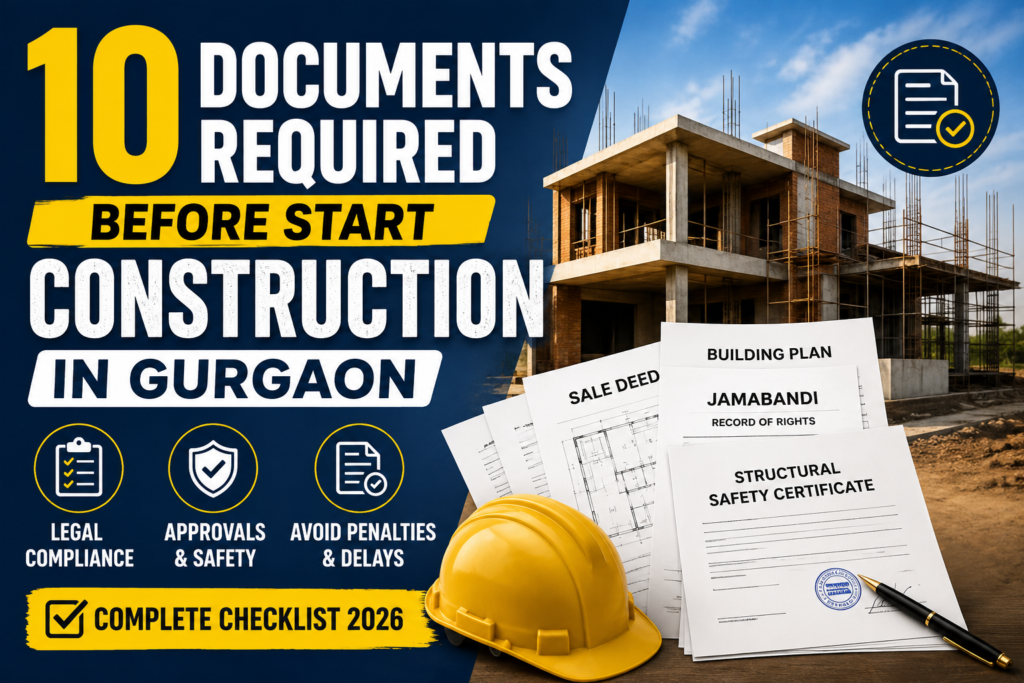
This comprehensive guide explains the 10 essential documents you must have before starting construction in Gurgaon, helping you avoid delays and ensure your project complies with local regulations.
Why Are Construction Documents Important?
Proper documentation ensures your project is:
- Legally approved
- Structurally safe
- Environmentally compliant
- Eligible for utility connections
- Easier to finance or insure
- More valuable during resale
Missing even one important document can delay your project by weeks or even months.
Documents Required Before Starting Construction in Gurgaon
1. Registered Sale Deed or Ownership Documents
The first and most important document is proof that you legally own the property.
Accepted ownership documents include:
- Registered Sale Deed
- Conveyance Deed
- Gift Deed
- Mutation Records
- Registered Lease Deed (where applicable)
Before any architect prepares drawings or any contractor begins work, ownership documents must be verified.
2. Latest Jamabandi and Property Records
Jamabandi is the official land ownership record maintained by the revenue department.
It confirms:
- Current ownership
- Land classification
- Survey details
- Revenue records
Always obtain the latest certified copy before submitting any applications.
3. Building Plan Approval
One of the most important permissions required before construction is the Building Plan Approval.
The approved plan includes:
- Floor plans
- Elevation drawings
- Setbacks
- Parking layout
- FAR calculations
- Height compliance
Construction should only begin after receiving official approval.
4. Architect’s Signed Drawings
Construction drawings prepared by a licensed architect ensure the building complies with applicable development norms.
These drawings include:
- Site layout
- Floor plans
- Elevations
- Sections
- Door and window schedules
- Area statements
Professional drawings also reduce construction errors.
5. Structural Stability Certificate
A qualified structural engineer certifies that the proposed building is structurally safe.
The certificate considers:
- Soil conditions
- Foundation design
- Beam sizes
- Column placement
- Earthquake resistance
- Load calculations
This document is particularly important for multi-storey buildings.
6. Soil Test Report
Although many homeowners skip this step, a soil investigation is highly recommended before construction.
A soil report helps determine:
- Safe bearing capacity
- Water table level
- Foundation type
- Soil composition
- Excavation requirements
A proper foundation begins with understanding the ground beneath your home.
7. NOCs (No Objection Certificates), Where Applicable
Depending on your property’s location and project type, you may need one or more No Objection Certificates (NOCs).
These may include approvals related to:
- Fire safety
- Airport height restrictions
- High-tension power lines
- Environmental considerations
- Other statutory authorities, where applicable
Not every residential home requires every NOC, but it’s essential to verify the applicable requirements before construction begins.
8. Utility Connection Approvals
Before construction begins, ensure provisions for utility connections are planned.
These include:
- Water supply
- Sewer connection
- Electricity connection
- Stormwater drainage
Proper planning avoids expensive modifications later.
9. Contractor Agreement
Many homeowners hire contractors based solely on verbal commitments.
Instead, sign a written construction agreement covering:
- Scope of work
- Project timeline
- Payment schedule
- Material specifications
- Warranty terms
- Delay penalties
- Quality standards
A clear agreement protects both parties.
10. Construction Insurance (Highly Recommended)
Construction projects face risks such as:
- Fire
- Theft
- Natural disasters
- Worker injuries
- Material damage
Construction insurance helps reduce financial risks and provides peace of mind throughout the project.
Why Choose BNT Global Services for House Construction in Gurgaon?
Building a home is one of life’s biggest investments. At BNT Global Services, we provide end-to-end construction solutions that combine technical expertise, transparent project management, and quality craftsmanship.
Our services include:
- Architectural Design
- Building Plan Assistance
- Structural Design
- Turnkey House Construction
- Residential & Commercial Construction
- Interior Design
- Renovation & Remodeling
- Project Supervision
- Material Procurement Support
From document planning to final handover, our experienced team helps homeowners build with confidence and clarity.
Frequently Asked Questions
Can I start construction immediately after buying land?
No. Property ownership alone does not authorize construction. You should obtain all required approvals and verify applicable legal requirements before beginning work.
Is a soil test mandatory for residential construction?
Requirements can vary depending on the project and local regulations. Even where it is not mandatory, a soil investigation is strongly recommended because it helps ensure a safe and cost-effective foundation design.
Who prepares the building drawings?
A licensed architect prepares the architectural drawings, while a qualified structural engineer designs the structural components.
Can I modify the approved building plan during construction?
Significant design changes may require revised approvals. Consult your architect before making structural or layout modifications.
How long does the documentation process take?
The timeline depends on the nature of the project, the completeness of the submitted documents, and the approval process with the relevant authorities. Planning your documentation early can help avoid unnecessary delays.
Conclusion
Construction is far more than laying bricks, it begins with careful planning and proper documentation. Completing the necessary legal, technical, and design requirements before breaking ground reduces risks, prevents costly interruptions, and sets the foundation for a successful project.
If you’re planning to build a home or commercial property in Gurgaon, investing time in the documentation process today can save significant time, money, and stress throughout your construction journey.
